
How to Participate in Board of Supervisors Meetings
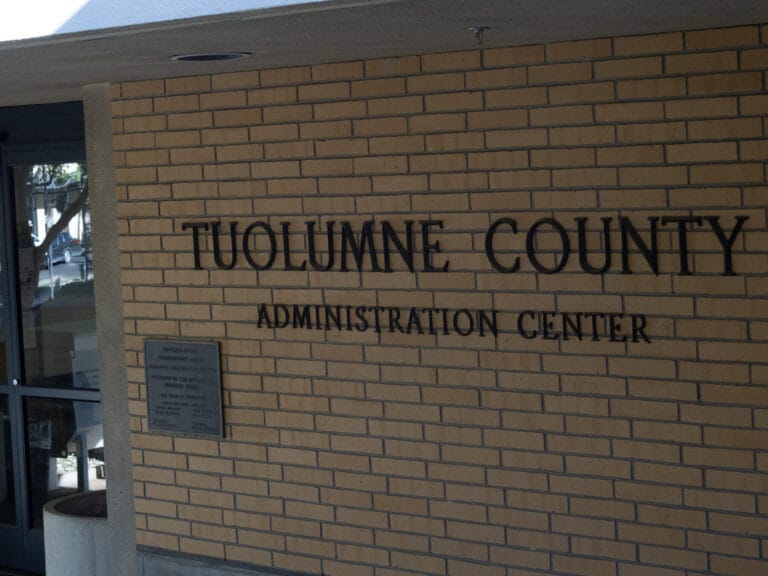
This article provides:
- Links to the Tuolumne County Government website and Board of Supervisors pages,
- Instructions on how to receive email notification of meetings and agendas, and
- A breakdown of typical agenda components, with general guidelines for public contributions at meetings.
Tuolumne County Government Links
The Tuolumne County Government website contains links to the departments and entities that make up the elected and administrative components of our county government. The Board of Supervisors’ 2026 meeting schedule can be found here. In general, regular Board meetings occur on the first and third Tuesdays of each month. About a week before each meeting, the agenda is posted on the Board Meetings page via the Public Portal widget.
CivicClerk Public Portal
It can be useful to receive automated notifications of county meetings. Once signed up with the CivicClerk Public Portal, agendas and links to ancillary documents will be sent to your email about six days before the meetings. To sign up for Board of Supervisors’ meetings, follow these steps:
- Go to the Tuolumne County Government page.
- Select “Board Meetings.”
- At the top of the left-hand menu, select “NEW CivicClerk Public Portal.”
- In the upper right corner, click on the blue square marked “SIGN IN.”
- If you do not already have an account, click on the red “Sign up.”
- Follow the prompts to create an account. Be sure to click on the red button “Create Account” at the bottom of the page.
Breakdown of a Meeting Agenda
A typical agenda for a Board of Supervisors meeting begins with a page of information and continues onto Page 2.
Opening Elements
- Pledge of Allegiance.
- Oral Communications. Members of the public may address the Board about anything of concern as long as the topic is not an agenda item to be considered later. Each speaker may talk for three minutes. A timer is clearly visible, and speakers receive an audible warning when one minute remains. The Oral Communications portion of the meeting is officially limited to fifteen minutes – only four or five presenters – but this limit is often waived at the discretion of the Board chair. It is important to note that Board members will not respond to oral communications, even when the speaker may have posed a direct question.
- Staff Reports. Tuolumne County government department heads may report on any developments in their sphere of authority that would be of interest to the public and the Board.
- Board Reports. Board members report on any community events or committee meetings they have attended since the previous meeting.
Action Items
Action items require a Board vote. They are numbered in the agenda and often include explanatory documents that are available alongside, but separate from, the agenda. The general format for presenting an action item is as follows:
- The proposal is read aloud by the Board Clerk.
- The presenting Supervisor explains the proposal.
- Any affected department representative may comment on the proposal.
- Board members may ask questions of the presenters.
- The public may make “public comment” on the proposal.
- Each member of the public who wishes to speak has three minutes to speak. A timer with a one-minute warning is deployed for each speaker.
- There is no limit to the number of people who may speak.
- Board members may comment on the proposal and may address issues or answer questions that the public brought up.
- There is a call for a motion on the proposal.
- A vote of the Board members is taken.
Types of Action Items
- Consent Calendar. This is a bundle of supposedly routine and non-controversial actions for the Board to consider together and might include things like recognizing a retiring committee member, declaring a day of recognition for a cause, or granting authority to a staff member to sign routine contracts. When the Consent Calendar is considered, the public may comment on any or all items in the bundle.
- Individual Proposals. These items require more discussion and deliberation and are considered individually.
- Department Items. These matters typically involve a presentation by a county department on a topic that the Board needs to decide. An example would be the annual round of presentations pertaining to the budget. Another might be a decision to enter into a contract or change the conditions of a contract. An example might be the recent decision to change the agreement with CalFire before the contract period had expired. Changes to the structure of county government may be considered, such as moving Animal Control from County Administration to the Sheriff’s Department.
- Appointments. These items involve scheduled presentations by entities doing business with the county. An example might be a report by Habitat for Humanity on plans to renovate the Miners Motel into units to house the homeless.
- Closed Sessions. These items are not discussed in public. Typically, they involve personnel decisions, or legal actions of a non-public nature. The agenda line for a closed session is read in the public forum. Members of the public may comment on these items after the reading and before the board enters its closed session. County counsel will announce whether there will be a public “report out” on the results of the closed session.
Final Remarks
Meetings of the Board of Supervisors begin at 9:00 AM on the first and third Tuesdays of each month and are held in the meeting room on the fourth floor of the County Administration Building, 2 Green Street, Sonora. They are televised live and later archived for public access through links on Access Tuolumne. There is no mechanism for a remote viewer to offer public comment; however, members of the public may email written comments, which will be included in the archive but will not be read at the meeting.
Engage Tuolumne recommends that the public sign up to receive notices of Board meetings, read the agendas and supplementary materials ahead of time, and prepare to participate. Board meetings are usually long, frequently extending past the mandatory break for lunch. Personalities are often on display, and emotions among officials and the public may be obvious, but these meetings are particularly instructive of how well local democracy may function.