
Fossil Fuels Industry v. Consumers: They Profit, We Lose
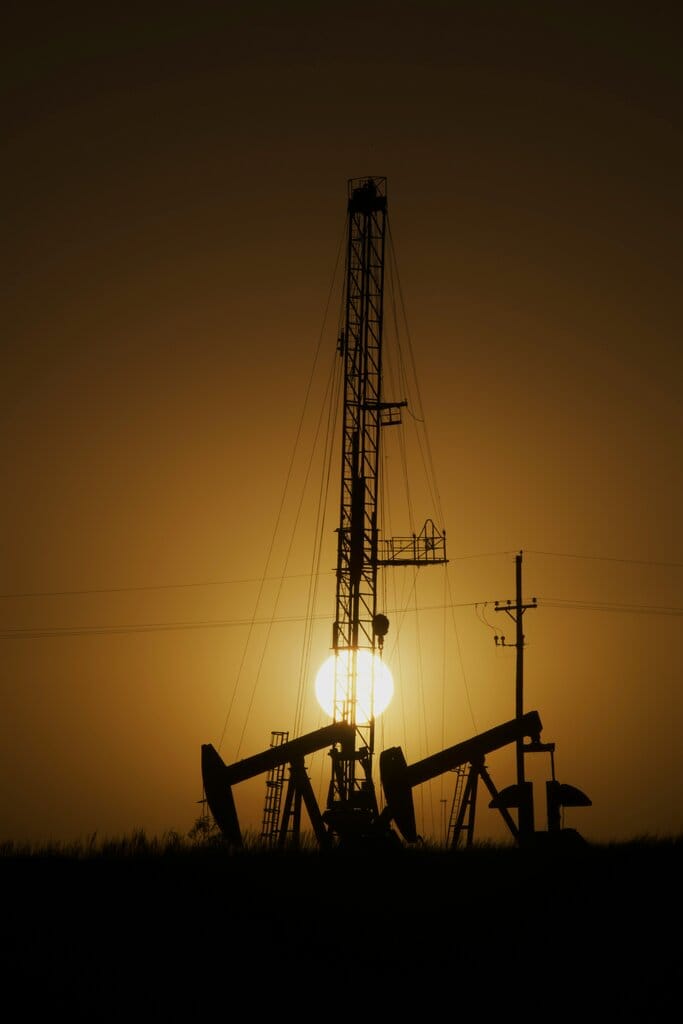
We have a choice: continue using fossil fuels to power our country or transition to alternative energy. Why bother to change? Costs? Our environment?
In 2024, the fossil fuels industry’s profits totaled $200 billion, but were bolstered by direct subsidies and tax breaks that cost American taxpayers $670 billion (1). It’s hard to tell what the true costs of fossil fuels are – we pay at the pump, and we fund subsidies to keep gasoline affordable. But clearly, industry profits depend on taxpayer support.
What weighs on us is climate change. In 1988, scientists warned Congress that burning fossil fuels would lead to global warming and could result in an unbearable climate (2). Industry-backed scientists knew this in the 1950s (3). Today, Congress resists efforts to develop alternative energy sources, even after President Biden’s Inflation Reduction Act demonstrated their economic appeal. Industry-government ties were revealed during the 2024 election cycle, when Trump offered to undermine the alternative energy sector of our economy in favor of the fossil fuels industry for a $1 billion campaign contribution (4).
Even disregarding scientific concerns, alternative energy is far more attractive than fossil fuels. California, on most days, is powered by solar and wind, and new battery technology allows the state to charge during the day to meet nighttime energy demands (5). A number of states are migrating to alternative energy. Texas, the oil capital of the U.S., gets 30 percent of its energy from wind (6).
Below is Graph A that compares the costs of different forms of energy.

For years, wind and solar have been the cheapest forms of energy and are faster to install, too. Timelines for power station projects from inception to completion are: solar, 17 months; wind, 20 months; fossil fuel, 4 years; and nuclear, at least 10 years (7). This year, the U.S. will produce enough solar panels to meet domestic demand (8). And investing in wind and solar creates three times more jobs than investing in the fossil fuel industry (9).
Below is Graph B that depicts energy source capacity additions, 2010-2024 (10). Solar and wind are leading the way.

Unfortunately, the current administration is committed to the fossil fuels industry. (Campaign donations are irresistible). Along with permission from a dysfunctional Congress, it is ending electric vehicle (EV) producer and purchaser incentives, risking auto industry jobs at a time when transportation represents 28 percent of U.S. greenhouse gas emissions (11). America must compete in a world where other nations’ economies are using alternative energy, giving China’s better-built and cheaper EVs an advantage over U.S. auto manufacturers’ products (12).
If America continues to depend on fossil fuels, Americans will pay more for energy. As the fossil fuels industry undermines our government’s ability to base national policy on unbiased, scientific information, it risks the well-being of humanity.
Take Action
- Switch to LED lighting, efficient HVAC systems, induction stoves, and better insulation.
- Consider rooftop or community solar programs. Check out California’s Self-generation Incentive Program https://www.cpuc.ca.gov/industries-and-topics/electrical-energy/demand-side-management/self-generation-incentive-program
- Drive a hybrid or an electric vehicle.
- Support community microgrids especially for critical facilities like schools, hospitals, or fire stations.
- Support “agrovoltaics.” This includes solar panels combined with agriculture to preserve farmland while producing power.
- Ask Tuolumne County Local Agency Formation Commission (LAFCo) to consider renewable-energy infrastructure in its Municipal Service Reviews and Spheres of Influence.
- Push for building-code updates that require new construction to be “solar-ready” and all electric.
NOTES
- Sarah Mcfarlane, “Global fossil fuel subsidies on the rise despite call for phase-out,” Reuters Explainer, November 23, 2023.
- Phillip Shabecoff, “Global Warming has Begun, Expert Tells Senate,” New York Times, June 24, 1988.
- Charlotte Taylor, SFS’24, “Defense, Denial, and Disinformation: Uncovering the Oil Industry’s Early Knowledge of Climate Change,” Georgetown University, Common House, October 25, 2025.
- Lisa Friedman, Coral Davenport, Jonathan Swan and Maggie Haberman, “At a Dinner, Trump Assailed Climate Rules and Asked $1 Billion from Big Oil,” New York Times, May 9, 2024.
- Governor Gavin Newsom, “In historic first, California powered by two-thirds clean energy – becoming largest economy in the world to achieve milestone,” July 14, 2025.
- “Texas Leads U.S. Renewable Energy Growth,” Texas Economic Development Corporation, April 30, 2025.
- Dave Borlace, “Rise up for a sun-powered planet,” YouTube, Just Have a Think, September 21, 2025.
- “United States Surpasses 50 GW of Solar Module Manufacturing Capacity,” Solar Energy Industries Association, February 4, 2025.
- “Al Gore on Trump and the Future of Climate Action,” Climate Forward, New York Times, September 22, 2025.
- “U.S. Electric Utility-Scale Capacity Additions, by Fuel Type,” Clean Edge.
- “Carbon Pollution from Transportation,” United States Environmental Protection Agency, April 25, 2025.
- Christian Shepherd, “How China pulled ahead to become the world leader in electric vehicles,” The Washington Post, March 3, 2025.
Graphs
- “Levelized Costs of New Generation Resources in the Annual Energy Outlook 2023,” U.S. Energy Information Administration, April 2023.
- “U.S. Electric Utility-Scale Capacity Additions, by Fuel Type,” Data Dives, Clean Edge.