
Can Communities Count on FEMA?
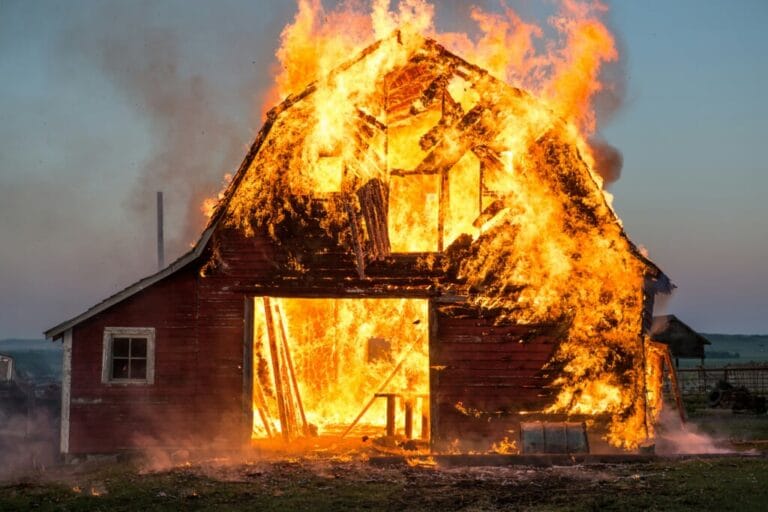
The Federal Emergency Management Agency (FEMA) is the U.S. government’s lead agency for coordinating disaster response and recovery. Its responsibilities include providing individual and public assistance to survivors and communities; administering disaster assistance programs such as housing aid, grants, and mitigation funding; and supporting state, local, tribal, and territorial emergency managers in preparedness and planning. However, President Trump and Homeland Security Secretary Kristi Noem have proposed abolishing FEMA (1).
Already, FEMA faces significant staff reductions to handle increasingly frequent disasters and burnout from consecutive emergencies. Its capacity to handle more severe hurricanes, wildfires, flash flooding, earthquakes, and tornadoes has diminished, eroding its ability to provide a rapid response. Roughly one-third of FEMA’s full-time workforce has left the agency since January 2025, leaving significant skills gaps and nearly 500,000 assistance applications unprocessed (2).
What can communities expect from FEMA when disaster strikes close to home?
Traditionally, people turn to the government for help with fire trucks, helicopters, water tenders, and law enforcement. Who else can remove toxic debris from private property, provide loans to rebuild, or restore critical infrastructure like water and sewage systems? FEMA has long functioned as the insurance policy communities depend on when disaster hits.
But the burden shifts to states, counties, and cities when the federal government cuts programs and funding. While states typically lead disaster response efforts, they rely heavily on federal resources when disasters overwhelm local capacity, according to Jeremy Edwards, FEMA’s deputy director of public affairs during the Biden years. Not every state, he warned, will be able to assume greater responsibility (1).
The Trump administration plans to further limit disaster support by making it harder to qualify for federal aid. One proposed change would raise the threshold number of structures destroyed before FEMA assistance is approved. For example, the Chinese Camp fire destroyed 50 structures, while the number required to qualify for FEMA funding is 600.
What can our community expect from its local government?
Similar to federal decision-makers, some of our local government leaders believe budget cuts, layoffs, and the outright elimination of staff, departments, and services are necessary. This is the worst possible time to downsize county operations. As disasters become more frequent and severe, fewer people will qualify for assistance, leaving more residents without help.
On January 6, 2026, the Board of Supervisors voted to close one of five fire stations and eliminate firefighter positions. The Board is now considering reducing—or potentially eliminating—the Office of Emergency Services (OES), which oversees the county’s disaster preparedness, coordinates response efforts, and manages recovery. This office must now rely entirely on grant funding available through federal and state programs. If OES dissolves, who will take on its responsibilities?
What should the county do to prepare for future emergencies?
If new limits on the federal government’s role make it harder to qualify for disaster assistance and contribute less money to hazard mitigation and recovery, cities and counties must prepare now for the possibility of reduced support when the next disaster strikes, according to Chris Currie, a director with the U.S. Government Accountability Office’s Homeland Security and Justice Team (3, 4).
Shouldn’t our county plan now for a reality with less federal and state disaster support? Does the county have a disaster relief fund? If not, should it establish one to ensure resilience after the next disaster?
Preparation cannot wait. The OES coordinator position, currently held by an experienced professional, must be funded through a stable, sustainable source to assure effective disaster planning. If federal support continues to shrink, readiness at the local level will determine how well our community survives and recovers.
Take Action
- Be present when the Board of Supervisors conducts its retreat (TBA) with county staff and the public to discuss the priorities of our county. This is the time and place to voice our concerns. Come prepared and speak up—this is what democracy looks like.
- Support the Red Cross. They will help in the first few weeks of a disaster.
- Create local or neighborhood emergency communication contact lists (text lists).
- Demand emergency funding at the state level.
- Push for emergency housing protections such as eviction freezes and utility shutoff bans.
- Those who have lived through a disaster can attend meetings, flood offices with calls, and document unmet needs publicly to share real-world experiences.
NOTES
- Gabriela Aoun Angueira (Associated Press), “FEMA will shift more disaster recovery responsibilities to the states, acting chief says,” PBS News, May 16, 2025.
- “FEMA Staffing Shortages Could Mean Disaster for Future Response Efforts,” U. S. Government Accountability Office (GAO), September 17, 2025.
- “9 Ways the FEMA Act Would Reform Federal Disaster Response,” Smart Cities Dive, September 11, 2025.
- Terry Gerton interviews Christoper Currie, Director, Homeland Security and Justice at the Government Accountability Office, “Readiness gaps may leave communities vulnerable when the next disaster strikes,” Federal News Network, January 21, 2026.