
Brainy Groveland—20 Years of Teaching Tenaya Kids to Love Reading
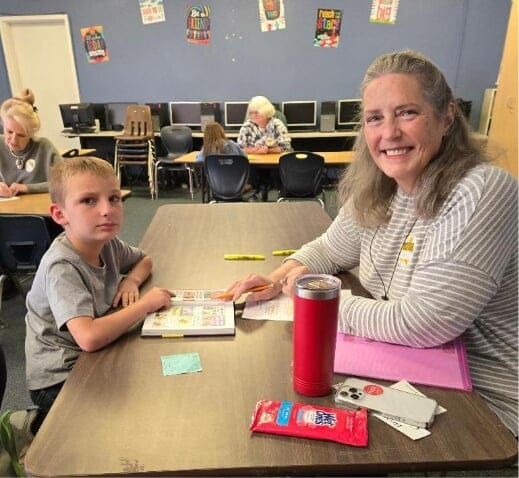
“Millions of American children get to fourth grade without learning to read proficiently, and that puts them on the high school dropout track,” warns the Annie E. Casey Foundation. “The ability to read by third grade is critical to a child’s success in school, life-long earning potential, and their ability to contribute to the nation’s economy and its security” (1).
Groveland’s response to that warning began with two retirees looking for something to do.
In 2006, Groveland residents Kathy and Steven Ryan retired and moved to Pine Mountain Lake. A former third-grade teacher, Kathy volunteered at Tenaya Elementary School. There, she saw children who needed help reading, parents who couldn’t assist, and a school open to suggestions.
The Ryans developed Brainy Groveland after discussions with fellow Groveland residents Nadine Pedron and Virginia Richmond. A retired college professor, Nadine designed the program using the simple idea of the “just right book.” Give a child a book that is not too hard and not too easy, and above all one that interests the child, and reading becomes a pleasure. Research supports the approach. A three-year study in 17 high-poverty schools found that the 852 students who chose their own books made measurable gains in reading (2).
With support from school administration, the Brainy Groveland program began in third grade—the Ryans’ significant donation funded the first books. Community volunteers staff the program and have no special skills, just a willingness to help. These volunteers spend one day a week with students to help them pick a “just right” book.
Once students pick a book, they sit with the volunteer and start reading. If the reading is too difficult, uninteresting, or too easy, they choose another book and try again. They take the book with them to continue reading. When they finish the book, the volunteers discuss it with them to see what they liked or didn’t like, talking about the book, the characters, and possible alternate endings. It’s a bit like a book club for third graders.
The volunteers aren’t tutors, and children aren’t penalized if they don’t finish the book. The point is to help children engage with the book, not just the mechanics of reading. A child having a good time is more likely to keep going. Co-founder Virginia Richmond credits the program’s longevity not only to its committed volunteers but also to the support of Tenaya’s teachers and administration.
As Virginia pointed out, the timing matters. During third grade, children are learning to read. After that, they are reading to learn. If those basic reading skills aren’t in place by then, the students face obstacles to learning in every subject (3).
After approximately five years, the school asked Brainy Groveland to implement a Brainy Math component for fourth graders, because math was pivotal at that age. Volunteers analyzed students’ annual test results and crafted math games, puzzles, and word problems that make math fun. Students work with volunteers alone or in pairs. Every session starts with a multiplication wheel because multiplication is the foundation of higher math, then moves to another math game. Volunteers help students understand what the math problem is really asking, how to think about it, and, finally, how to solve it. The volunteers help the children to discover that math “isn’t scary.”
A sign of success for Brainy Reading and Brainy Math is that they are now part of the school’s curriculum. The Tuolumne County Superintendent of Schools recently met with Virginia and observed volunteers in action to provide similar programs elsewhere in the county.
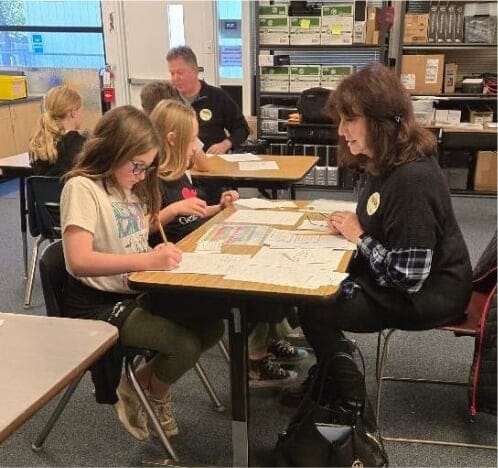
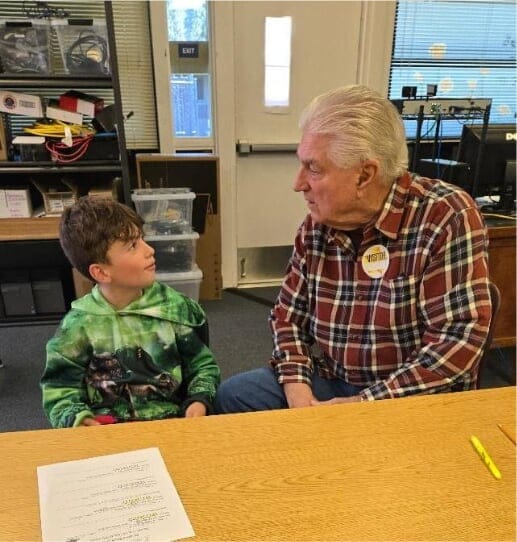
In addition to the reading and math programs, every third grader receives a book before Christmas and another at the end of the year. Brainy Groveland also contributes to the yearly “Stuff the Bus” event, donating $2,500 this year. Virginia keeps in close contact with the school administration to find other ways to help. For example, one year the school principal noted that many students lacked proper winter shoes. Brainy Groveland donated $1,000 worth of shoes.
The volunteers get something back, too. Many have run into former students in town, and the students remember them fondly from their days in Brainy. Most volunteers are avid readers themselves, and nothing beats watching a child fall in love with a book for the first time. The look on a child’s face when they say, “I like this” or “I can do this,” is why the volunteers keep coming back.
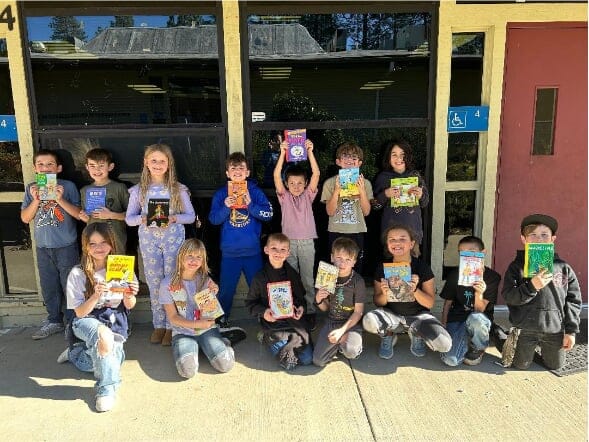
The takeaway: community members saw a need, got together, figured out a way to meet it, proposed a program to the school, and then recruited volunteers. Now, twenty years later, the success is evident. What began as a reading program for third graders grew, at the school’s request, into a math program for fourth graders, and both became part of the curriculum. County administrators are considering expanding the program to other schools—a true win-win for all.
Take Action
- Support literacy programs in your local schools and libraries, with your time or your money.
- Join a chapter of the Friends of the Library.
- Write letters to the editor to promote and support similar programs.
- Write letters to the editor to promote and support similar programs.
NOTES
- “Early Warning! Why Reading by the End of Third Grade Matters,” The Annie E. Casey Foundation, January 1, 2010.
- Richard L. Allington et al., “Addressing Summer Reading Setback among Economically Disadvantaged Elementary Students,” Reading Psychology, ERIC, 2010.
- Interview with Virginia Richmond, co-founder of Brainy Groveland, 2026.